Remote Paddle-In Camping: How to Pack and Prepare for Your Trip
So you want to camp out at Green River Reservoir, Waterbury Reservoir, or somewhere else only accessible by boat. Where do you start? How’s it different from car camping?

Transportation to your Site
First, think about your mode of transportation and what it can carry. A canoe or pack boat is your best bet, as it has the most space and load capacity. A standard-sized tandem canoe can easily carry enough supplies for two people on a weekend trip (or longer, honestly!).
If you’re traveling with a kayak or SUP, things get a bit trickier but are still doable. You may need to consider items that are “backpacking” specific, like a tent and a sleep system that compresses down very small. You may also need to reconsider some “wants” over “needs” - for example, can I go without a big campfire? (and needing to bring in several pounds of firewood?) You have less space to work with, but the challenge is doable if that’s your only option.
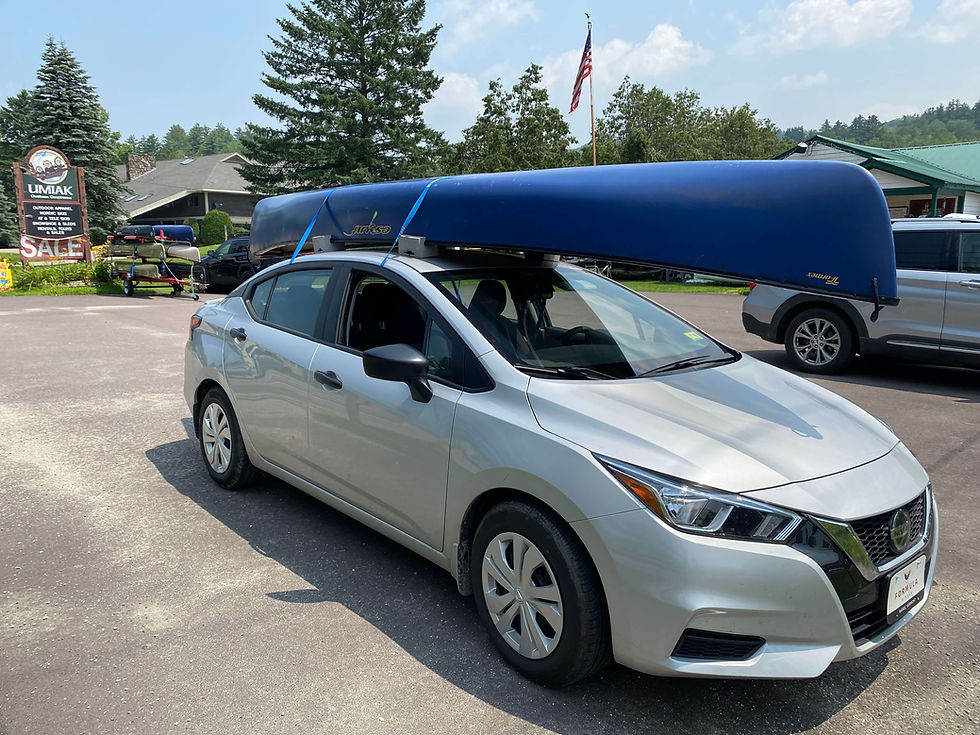
If you’re looking to rent a boat for a campsite, consider Umiak Outdoor Outfitters! Overnight rentals are available from both our Stowe and Richmond locations.
We'll help you safely secure the boat to your vehicle, provide transportation tips, and make sure you're ready for your adventure. We can accommodate nearly any vehicle setup, and all boat rentals include paddles and life jackets.
Umiak offers a range of rental canoes, including lightweight composite models that are easy to handle on and off the water, as well as durable plastic boats built for rugged use. Lightweight composite canoes make portaging and transportation easier while delivering excellent paddling performance. If you're ready to own your own boat, we also carry a wide selection of canoes, kayaks, and other paddlecraft for sale, with options for every paddler, adventure, and budget.
If you're heading to Waterbury Reservoir (850 acres) for an overnight camping trip, be sure to launch from the
Moscow Paddler's Access (also known as Cotton Brook Boat Launch)
Blush Hill Access
Dam Access
Littler River State Park access is for those who have reserved a cabin, lean-to, RV campsite, or tent campsite. As well as those visiting their many miles of hiking and biking trails.
The Waterbury Center State Park access and boat rentals are day use only.
If you know your campsite number, consult the Waterbury Reservoir map to determine the most convenient launch site for your trip. If you're choosing to camp at Green River Reservoir (653 acres), the primary access point is located at the southern end of the reservoir on Green River Dam Road. As a designated "quiet" lake under Vermont's Use of Public Waters Rules, only human-powered watercraft and boats with electric motors limited to 5 mph are allowed.
Be sure to reserve your campsite in advance, as sites are limited and often fill quickly during the paddling season.
Reservations can be made through the Vermont State Parks reservation system:
Online through the Vermont State Parks reservation website
By phone through Vermont State Parks Reservations
Planning ahead will help ensure your preferred campsite is available and allow you to focus on enjoying your trip.
Luggage
A well-weighted canoe will rarely tip over, but it’s important to be prepared just in case! There are several options for carrying and waterproofing your belongings, with a range of prices and ease of use.
Trash bags and Ziplocs – you probably have them on hand already! They can tear easily and may be hard to carry, but they get the job done.
Hard-sided coolers, plastic bins, or buckets with lids - bulky but durable and not hard to find for cheap. Great option for food or other heavy/fragile items that might not fit best in a plastic bag.

Dry bags – Dry bags are one of the best ways to keep your gear protected from water while also providing excellent durability. Because they can be used repeatedly for years, they're a reliable choice for anyone who spends a lot of time on the water. Available in a wide range of sizes and materials, dry bags can accommodate everything from electronics and extra clothing to sleeping bags and camping gear. Lightweight options are ideal for organizing and protecting smaller items, while larger, heavy-duty models with carrying straps are built to handle extended trips and rugged conditions. Trusted brands such as NRS and SealLine have long been favorites among paddlers and outdoor professionals, offering durable construction along with warranty and repair programs.
Food Storage
Since your car will be unavailable overnight, you'll need to have a plan for food storage. Overnight food storage is an important part of a safe and enjoyable camping experience. Check out the camping area’s website or call to get their recommendations for this- some provide bear boxes (Green River Reservoir does at most sites, Waterbury Reservoir currently does not), some might recommend other strategies like using bear-proof canisters or hanging food. For example, some places like the Adirondack Park require specific canisters. Waterbury Reservoir recommends hanging food bags to help protect both campers and wildlife. A limited number of food-hanging bags are available for use at the reservoir, generously provided through donations from the non-profit group Friends of Waterbury Reservoir. Campers are encouraged to properly store all food and scented items to help keep campsites safe and minimize wildlife interactions.

If your best option is to hang your food, you’ll need to pack a rope (or paracord) and a bag large enough for all your food to hang in. If you have a lot of food, you may even want to consider several pieces of rope or a 2:1 system so it’s easier to hang. When you’re setting up camp, look out for a tree branch that is high enough (and sturdy enough) to suspend your food without it touching anything else around it. This is important for smaller critters that can climb, like squirrels or mice.
A Suggested Packing List
Lastly, canoe-camping is so rewarding because it really feels “out there” - quiet and immersed in nature. However, it can be quite annoying to have to head back to your car for supplies you’ve forgotten. Make sure you have everything you need before you head out! Here is a suggested packing list for your canoe-camping adventure:
Canoe travel basics
a. Boat
b. Paddle(s)
c. PFD (Life jackets save lives!)
d. Map and/or GPS; campsite reservation information
e. First aid supplies (Wound care, sunburn and bugbite care, consumables like aspirin and Benadryl, CPR mask, etc.)
f. Throw rope (rescue equipment that can double as a clothesline or be used to anchor your boat to shore at camp!)
g. Boat care supplies (Sponges, bailer, or bilge pump)
Shelter – Something to sleep under. If you’re expecting rain, an extra shelter for relaxing at camp might be the move.
a. Tent, tarp, hammock with rainfly, or other as preferred
Sleep system – It's important to sleep well, even when you’re camping. At the very least, a sleeping bag and mat to insulate you from the ground. If you are stuck in a lightning storm, an insulating mat can also be a critical piece of safety gear to prevent lethal ground strikes.
a. Sleeping bag
b. Sleeping mat (yoga mat, closed cell foam pad, or inflatable)
c. Pillow
4. Cooking supplies – whether you choose to cook everything on a campfire or on a camp stove, it’s important to have all the tools you need. For best results, however, don’t rely solely on one way or another.
a. Stove and fuel
b. Lighter(s) and backup matches (in waterproof container)
c. Fire starters (can be as simple as cotton balls or dryer lint with petroleum jelly).

You will also need cookware, depending on the meals you plan on bringing. Cooking over a campfire can damage your regular kitchen pots and pans, so choose something durable like cast-iron, other camping-specific cookware, or something you don’t mind getting soot all over! Also, plan for a way to handle hot cookware safely and clean it after using.
This can look like:
a. Cast-iron pan
b. Pot(s)
c. Pliers (for handling hot pots and pans)
d. Scraper and sponge (cleaning tools)
e. Biodegradable soap, like green soap or Dr. Bronner’s
5. Kitchen supplies – These are the items that you will need to eat your meals. Think about what you’re planning on eating and plan accordingly. This can look like:
a. Plates and/or bowls
b. Eating utensils
c. Cups, water bottles, or mugs (for hot beverages)
d. Serving utensils like tongs or a large spoon
e. Cutting board and knife (as needed)
f. Can-opener (as needed)
g. Aluminum foil (as needed, for sealing opened food or cooking over the fire)
h. Trash bags
i. Paper towels
Food – goes without saying!
a. Breakfast, lunch, and dinners!
b. Cooking oil or butter (optional)
c. Spices (optional)
d. Coffee or tea (optional)
7. Water – most canoe-camping will not have spigots nearby, and drinking water from a reservoir or lake may not be safe. Bringing your own water is recommended, with a backup water purification method for emergencies.
a. Water (jugs from the grocery store work just fine, or purchase a reusable dromedary bag or jerry can)
b. Aquamira, iodine dropper, or similar
8. Food Storage
a. Durable drybag, storage bin, or cooler
b. Rope for hanging (if needed)
9. Waste disposal – things we often forget about. Most campsites will have moldering toilets, but you probably will need to pack out your garbage. Make sure to also critter-proof your garbage with your food at night.
a. Trashbag(s)
b. Toilet paper
c. Hand sanitizer

10. Personal items
a. Clothes – at the very least, something to change into to sleep. You don't want to sleep in wet clothes!
b. Raincoat
c. Footwear – It’s important to keep your feet covered around camp and while walking (or jumping) in the water. Who knows what kind of glass or other small, sharp things could be on the ground.
d. Self-care supplies (hat and sunglasses, sunscreen, lip balm, electrolytes, etc.)
e. Headlamp or flashlight
f. Toiletries (toothbrush, toothpaste, soap or lotion as desired)
g. Medications, including inhalers or EpiPens (as needed)
h. Glasses or backup contacts, contact lens solution (as needed)
i. Menstrual products and Ziplocs for safe disposal of used products (as needed)
11. Entertainment/creature comforts (all optional)
a. Hammock or camp chair
b. Analog games or books
c. Binoculars
d. Camera
e. Portable speaker (take note of quiet hours!)
f. Camp Lantern
g. Dining Fly
Remote camping offers a unique opportunity to disconnect from the noise of everyday life and immerse yourself in nature's quiet beauty. With thoughtful planning, the right gear, and a focus on safety, you can enjoy a memorable adventure on the water and at camp. For quality paddling equipment, expert advice, and outdoor essentials, Umiak Outdoor Outfitters can help you get ready for your next unforgettable paddle-in camping experience.


